Water Freedom System Review 2026 Honest Analysis & Complete Buyer’s Guide & Real Results
👤 Reviewed By: Jitendra Malaviya | ✍️ Nutrition Expert Health & Wellness Writer | 📅 Last Updated: August 2026 | ✅ Fact-Checked & Verified | ⏱️ Reading Time: 8 minutes Read
Looking for an honest Water Freedom System review? We analyzed the ingredients, how it works, real user results, pricing, pros and cons—everything you need before buying.
Affiliate Disclosure: This post contains affiliate links. If you purchase through these links, we may earn a commission at no extra cost to you.
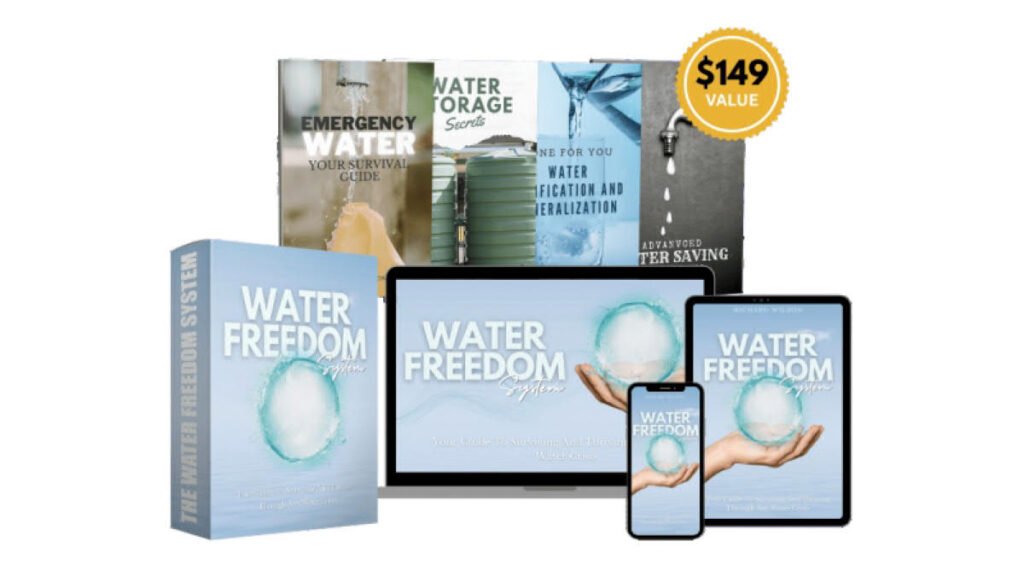
The Water Freedom System Review (2026): Complete Analysis, Benefits & Side Effects
Our full Water Freedom System review covers how this DIY atmospheric water generator works, real pricing, pros and cons, and whether it’s worth building in 2026.
Quick Summary Overview Box
- Star Rating: 4.3 / 5
- Verdict: A practical, low-cost, do-it-yourself guide for producing your own drinking water at home using atmospheric moisture — best suited to households that want backup water security rather than an instant, plug-and-play appliance.
- Price: 👉 Check Latest Price →
- Best For: Preparedness-minded homeowners, off-grid households, people in humid climates, and anyone who wants a backup water source that doesn’t depend on the municipal grid.
Introduction
Clean water is something most of us only think about when it stops flowing. A boil-water notice. A hurricane knocking out the grid for a week. A well running low in a dry summer. For a growing number of households across the United States, United Kingdom, Canada, Australia, New Zealand, and beyond, those moments have become less rare and more of a reason to plan ahead.
That’s the gap the Water Freedom System is built to fill. It isn’t a supplement, a gadget you buy off a shelf, or a subscription service. It’s a digital guide that teaches you how to build your own atmospheric water generator — a device that pulls moisture out of the air around you and turns it into clean, drinkable water using condensation and filtration.
In this review, we’ll walk through exactly what’s inside the Water Freedom System, how the underlying technology works, who it’s actually built for, and where it falls short. We’ll also cover pricing, the refund policy, and the questions we see asked most often before people decide to buy.
It’s worth being upfront about something most reviews skip: this isn’t a miracle fix for every water problem, and it won’t behave identically in every home. It’s applied science — the same condensation principle you see on a cold window or a chilled glass — scaled up into something a household can build and use. Understanding that framing matters, because it sets realistic expectations for what the system can and can’t do for your specific situation, climate, and budget.
Water security has quietly become a bigger topic of conversation across Tier-1 countries over the past few years. Aging infrastructure in parts of the US and UK, drought cycles in Australia and New Zealand, and increasingly unpredictable storm seasons across the Gulf Coast and Atlantic regions have all pushed more households to ask the same question: what happens if the tap stops working, even for a few days? The Water Freedom System is one answer among several, and this review is designed to help you decide honestly whether it’s the right one for your household, or whether a different approach might serve you better.
About Us
We research and review preparedness, self-sufficiency, and home-resilience products so our readers don’t have to spend hours digging through marketing pages and conflicting claims. Our team looks at the underlying technology, cross-checks vendor claims against publicly available science, and reports both the strengths and the limitations of each product we cover. This review reflects that same standard.
What Is the Water Freedom System
The Water Freedom System is a downloadable eBook and video guide that teaches you how to assemble a home-scale atmospheric water generator (AWG) from parts you can source locally or online. The system is designed around a straightforward idea: the air around us — especially in humid regions — contains a surprising amount of water vapor. With the right combination of an air intake, a cooling or condensing unit, and a filtration stage, that vapor can be converted into liquid water clean enough to drink.
Rather than selling you a pre-built appliance, the guide hands you the blueprint and parts list so you can build the unit yourself, generally for a few hundred dollars in materials. That build-it-yourself approach is what keeps the entry cost low compared to commercial atmospheric water generators, which can run into the thousands of dollars.
The guide itself is delivered as a downloadable PDF with accompanying instructional video content, meaning there’s no physical shipment to wait for. Once you purchase access, you can start reviewing the parts list and planning your build the same day. This digital-first delivery is fairly standard for guides in the preparedness and self-sufficiency space, and it’s one of the reasons the entry price stays as low as it does—there’s no manufacturing, packaging, or shipping cost baked into what you’re paying for.
It’s also worth noting what the Water Freedom System is not. It is not a pre-assembled appliance you plug in and forget about. It is not a whole-home water treatment system designed to replace municipal plumbing. And it is not a guaranteed fixed output regardless of where you live — the amount of water you can realistically produce is tied directly to the humidity levels in your specific location and the effort you put into the build.
Why Choose the Water Freedom System
There are several water-independence options on the market — rain barrels, gravity filters, whole-home filtration systems, bottled water storage. The Water Freedom System occupies a different niche: it doesn’t require an existing water source at all. It only needs air with enough humidity in it, which makes it appealing for a specific set of situations:
- Areas prone to drought where rainwater harvesting isn’t reliable
- Regions with periodic boil-water advisories or aging municipal infrastructure
- Off-grid or rural properties without a dependable well
- Emergency preparedness for hurricanes, storms, or extended power outages
- Anyone who simply wants to reduce dependence on bottled water and municipal supply
For households in coastal or humid inland regions of the United States, the UK, and the UAE and wider Gulf region, ambient humidity is rarely in short supply — which is precisely the resource this system is built to exploit. Rather than treating humidity as an inconvenience, the Water Freedom System treats it as a raw material. That reframing is really the core value proposition here: it turns something already present in your environment into something usable, without needing a well, a reservoir, or a connection to the municipal grid at all.
Compare that to the more common approaches people reach for first — stockpiling bottled water, installing a whole-home filter, or digging a well — and the appeal becomes clearer. Bottled water storage takes up space and creates ongoing cost. Whole-home filters improve water you already have but don’t help if the supply itself is interrupted. Wells require significant upfront investment and aren’t feasible on every property. The Water Freedom System sits in a different lane entirely: it doesn’t upgrade or store existing water, it manufactures new water from the air itself.
Who Created the Water Freedom System
The Water Freedom System is credited to Chris Burns, who developed the concept after researching military-grade atmospheric water generation methods and adapting them into a version buildable with consumer-available parts and basic tools. The pitch behind the guide is straightforward: technology the military and large-scale commercial systems have used for years shouldn’t be out of reach for an ordinary household with a weekend and a modest budget.
As with most digital guides in this space, we’d encourage you to treat creator biography claims with reasonable skepticism and focus your evaluation on whether the technology and instructions hold up — which is what the rest of this review does.
The Science Behind the Water Freedom System
Atmospheric water generation isn’t new or fringe technology. It’s the same basic principle behind why a cold glass of lemonade “sweats” on a humid day — when air meets a cold surface, the water vapor in that air condenses into liquid droplets. Scale that principle up with a fan to pull in air, a cooling element to trigger condensation, a collection basin, and a filtration stage, and you have a functioning water generator.
Commercial and military atmospheric water generation units use this exact process, just with more industrial-grade components. The Water Freedom System’s core claim is that you can replicate the same condensation-and-filtration cycle using more affordable, accessible parts — with a corresponding tradeoff in output volume and speed compared to industrial units. For background on how public water systems are regulated and treated for comparison, see the EPA’s overview of drinking water treatment.
Scientifically Grounded Formulation
While “formulation” more commonly applies to supplements, in the context of a build guide it refers to the sequence of components and steps the system relies on:
- Air intake stage — drawing ambient humid air into the system
- Condensation stage — cooling the air enough that water vapor turns to liquid
- Collection stage — channeling condensed water into a storage vessel
- Filtration stage — passing the collected water through sediment, carbon, and (in more advanced builds) UV filtration to remove particulates and pathogens
- Storage stage — holding the finished water in a clean, sealed tank for use
Each stage mirrors a step used in commercial-grade systems, just built at a scale and cost point suited to a single household.
Key Components Explained
- Fan/Air Intake Unit: Pulls humid air into the system; performance is directly tied to ambient humidity levels, so the system works best in moderate-to-high humidity climates.
- Condenser/Cooling Element: The core mechanism that triggers water vapor to condense into droplets. This is typically the most technical part of the build.
- Collection Basin: A simple, non-toxic container that gathers condensed water before it moves to filtration.
- Sediment Filter: Removes larger particulates from the collected water.
- Carbon Filter: Improves taste and removes chemical residues.
- UV Filter (optional upgrade): Neutralizes bacteria and pathogens for an extra layer of safety.
- Storage Tank: Holds finished water, sized according to household need.
- Solar Power Option: Many builders power their unit with a small solar panel and inverter, allowing it to run off-grid.
Benefits
- Produces drinking water without relying on a municipal connection
- Works especially well in humid climates where ambient moisture is abundant
- Can be powered by solar panels for full off-grid operation
- Lower upfront cost than most commercial atmospheric water generators
- No recurring subscription or ongoing service fees
- Digital format means instant access after purchase
- Encourages a genuinely useful, transferable DIY skill
- Reduces long-term reliance on bottled water
Beyond the headline benefits, there’s a less obvious one worth mentioning: the process of building the system itself tends to leave people with a genuinely useful, transferable skill set. Understanding how condensation, filtration, and basic solar setups work together isn’t knowledge that expires once your unit is built — it’s the kind of practical competence that carries over into other home projects, from rainwater harvesting to basic off-grid power setups. For many buyers, that hands-on learning is as valuable as the water output itself.
There’s also a psychological benefit that’s easy to overlook in a purely technical review: households that have built and tested a backup water system report feeling measurably more prepared heading into hurricane season, drought warnings, or winter storm advisories. That sense of preparedness — knowing you have a functioning fallback rather than just a hope that the grid holds — is part of what buyers are actually paying for.
Side Effects and Safety Considerations
Because this is a DIY build rather than an ingestible product, “side effects” in the traditional sense don’t apply. The real safety considerations are mechanical and procedural:
- Water quality depends on your build quality. Skipping or under-specifying the filtration stage can result in water that isn’t as clean as advertised. Follow the filtration steps exactly as described.
- Electrical safety matters. If you’re wiring a fan, cooling element, and inverter yourself, basic electrical safety precautions apply — this is not a project to rush.
- Air quality in your location affects output. If you live somewhere with significant airborne pollution, your intake air quality should be factored into your filtration choices.
- This is not a substitute for professional water testing. If you plan to rely on this system as a primary water source long-term, periodic water testing is a sensible precaution, the same way you’d test well water. For general guidance on what to look for, the CDC’s guidance on drinking water safety is a useful reference point.
Advantages and Features
- Detailed step-by-step blueprints included in the guide
- Parts are commonly available at hardware stores or online retailers
- Scalable — you can build a small personal unit or a larger household-capacity version
- Compatible with solar power for true off-grid use
- No specialized tools required beyond basic hand tools
- Digital delivery means you can start immediately after purchase
How to Use the Water Freedom System
- Download the digital guide immediately after purchase
- Review the full parts list and source your materials locally or online
- Follow the assembly blueprint step by step, starting with the air intake and condenser stage
- Install the filtration stages in the order specified
- Connect your storage tank and, if desired, your solar power setup
- Run an initial test cycle and inspect water clarity before regular use
- Perform basic periodic maintenance (filter changes, cleaning the collection basin)
How Does the Water Freedom System Work?
At a high level: a fan draws humid air into the unit, where it passes over a cooling element cold enough to force the water vapor to condense into liquid droplets. Those droplets collect in a basin, then pass through sediment and carbon filtration (and UV filtration, in upgraded builds) before landing in a sealed storage tank. The entire cycle can run on solar power, which is what allows the finished system to operate independently of both the municipal water grid and the electrical grid.
Who Is the Water Freedom System Specifically For?
- Homeowners in humid or moderately humid climates who want a genuine backup water source
- Rural and off-grid property owners without a reliable well
- Preparedness-focused households planning for hurricanes, storms, or extended outages
- People who enjoy hands-on DIY projects and want a functional result at the end
- Anyone looking to reduce their monthly spend on bottled water
Who Should Use the Water Freedom System
This system is best suited to people who are comfortable following a technical build guide and who live somewhere with reasonable ambient humidity. If you live in an extremely arid climate, output volume will be lower, and your expectations should be adjusted accordingly. It’s also a strong fit for anyone who already has some DIY or basic electrical experience, since that shortens the learning curve considerably.
Pros and Cons
Pros:
- Genuinely low-cost entry point compared to commercial atmospheric water generators
- Works without any dependency on municipal water infrastructure
- Solar compatibility supports full off-grid use
- One-time purchase, no recurring fees
- Backed by a 60-day money-back guarantee
Cons:
- Output is directly tied to local humidity — arid climates will see reduced performance
- Requires hands-on assembly; not a plug-and-play appliance
- Some basic tools and mechanical comfort are needed
- Filtration quality depends on following the build instructions precisely
Pricing and Where to Buy
The Water Freedom System digital guide is currently offered at a heavily discounted price of around $39, down from its regular listed price. Beyond the guide itself, expect to spend roughly $250–$300 on physical materials if you build the full unit, depending on the scale you choose and whether you add a solar power setup.
We recommend purchasing directly through the official vendor page linked above rather than third-party resellers, to make sure you’re getting the current version of the guide and are covered by the official refund policy.
Money-Back Guarantee
The Water Freedom System is backed by a 60-day money-back guarantee through ClickBank’s marketplace, which means you have a full two months to try the build and request a refund if it doesn’t meet your expectations. ClickBank’s refund process is handled independently of the vendor, which adds a layer of buyer protection.
Real Customer Feedback
Reported feedback from people who’ve built the system tends to cluster around a few consistent themes: users in humid regions report the most satisfying output, several mention appreciating the clear step-by-step instructions, and more than one buyer has noted using the system as a genuine backup during a power outage rather than as their everyday primary water source. As with any DIY project, results vary based on climate, build quality, and how closely the instructions are followed.
Customer Testimonials: Real Results, Reviews, and Comments.
Results Disclaimer
Individual results with the Water Freedom System will vary based on ambient humidity, build quality, component selection, and climate. The output figures referenced by the vendor represent optimal conditions and should not be treated as guaranteed performance in every environment. This review is intended to provide general information and does not guarantee any specific outcome.
Final Verdict
Star Rating: 4.3/5
The Water Freedom System is a solid pick for anyone who wants a genuinely independent backup water source and doesn’t mind putting in a weekend’s worth of hands-on assembly. It won’t replace municipal water in an arid climate, and it isn’t a plug-and-play appliance — but for the price, it’s one of the more accessible entry points into atmospheric water generation currently available. We’d recommend it specifically to preparedness-focused households, off-grid property owners, and anyone in a humid region looking to cut their bottled water spend.
How the Water Freedom System Compares to Other Options
- Vs. Rainwater Harvesting: Rainwater harvesting depends on precipitation and storage space; the Water Freedom System depends on humidity and requires no rainfall at all, making it a better fit for drought-prone regions.
- Vs. Commercial Atmospheric Water Generators: Commercial units typically cost several thousand dollars and are ready to use out of the box; the Water Freedom System trades convenience for a dramatically lower price point.
- Vs. Gravity Water Filters (e.g., Berkey-style systems): Gravity filters purify existing water but don’t generate new water — the two solutions solve different problems and can complement each other. In fact, many households end up using both: an atmospheric generator to create water, and a gravity filter as an additional polishing step before drinking.
- Vs. Bottled Water Stockpiling: Stockpiling is simpler upfront but comes with recurring cost, storage space demands, and an expiration date on your supply. The Water Freedom System has a higher one-time cost but no ongoing spend and no shelf-life concerns once it’s built.
- Vs. Well Drilling: Drilling a well is typically the most expensive option by a wide margin, often running into the tens of thousands of dollars depending on depth and geology, and it isn’t feasible on every property. The Water Freedom System is a fraction of that cost, though it also produces meaningfully less water per day than a functioning well.
None of these comparisons are meant to suggest one option is universally “best.” The right choice depends on your climate, your budget, your property, and how much hands-on effort you’re willing to put in. For many households, the most resilient setup actually combines two or three of these approaches rather than relying on a single solution.
Climate Considerations Across Tier-1 Regions
Because output is tied directly to humidity, where you live has a bigger impact on results than almost any other factor. Here’s a general sense of how the system tends to perform across different Tier-1 regions:
- United States (Southeast, Gulf Coast, parts of the Pacific Northwest): Generally favorable humidity levels make this a strong candidate region for the system.
- United Kingdom: Consistently moderate-to-high humidity year-round makes most of the UK a reasonably good fit, particularly in coastal and western regions.
- Canada (coastal British Columbia, Atlantic provinces): Coastal regions tend to perform better than the drier interior provinces.
- Australia: Coastal cities like Sydney, Brisbane, and Darwin see stronger performance than the arid interior, where output will be more limited.
- New Zealand: Naturally humid, temperate climate across most of the country makes it broadly favorable.
- European Schengen countries: Coastal and Western European nations tend to outperform drier Southern and Eastern regions during summer months.
- United Arab Emirates and Gulf countries: Coastal cities with high humidity (such as those along the Gulf coastline) can see strong condensation output, even though the region is arid overland, because ambient humidity near the coast is often higher than people expect.
If you’re in a drier interior region anywhere in this list, that doesn’t rule the system out — it just means tempering your output expectations and possibly pairing it with a secondary water strategy like rainwater harvesting.
Tips to Get the Most Out of the Water Freedom System
- Position your air intake in the most humid area available (near vegetation, shaded outdoor space, or naturally humid rooms)
- Don’t skip or substitute filtration stages, even if output seems clean to the eye
- Pair the system with a small solar setup if your goal is full off-grid independence
- Test water clarity and taste after each filter change
- Keep a maintenance log so you know when filters need replacing
- Run your unit during the most humid hours of the day (typically early morning or overnight) if you’re trying to maximize output in a marginal climate
- Insulate cold-water lines or condenser components if you live somewhere with hot ambient air, since temperature differential is what drives condensation efficiency
- Start with a smaller build to learn the process before scaling up to a larger, higher-output version
- Keep spare filter cartridges on hand so a single worn filter doesn’t take your whole system offline
- Document your build with photos as you go — it makes troubleshooting far easier if something needs adjusting later
Frequently Asked Questions
1. Is water made from air actually safe to drink?
Yes, provided it passes through proper filtration. Atmospheric water starts out relatively free of the sediment and mineral buildup found in ground or surface water, but it still needs filtration to address particulates and any airborne contaminants. The WHO’s drinking water fact sheet outlines the general safety standards any drinking water source should meet.
2. How much water can the system produce daily?
Output depends heavily on ambient humidity and unit size, with vendor-reported ranges commonly cited between 20 and 60 gallons per day under favorable conditions.
3. Does the Water Freedom System work in dry climates?
It works best in moderate-to-high humidity environments. In very arid climates, output will be significantly reduced.
4. Do I need electrical experience to build this?
Basic comfort with hand tools and simple wiring is helpful. The guide is written for beginners, but some mechanical aptitude speeds up the process.
5. Can the system run entirely off solar power?
Yes, many builders pair the unit with a small solar panel and power inverter for fully off-grid operation.
6. How much does it cost to build the full system?
Beyond the guide’s purchase price, expect roughly $250–$300 in materials, depending on scale and whether you add solar components.
7. Is this a one-time purchase?
Yes, there are no subscription fees for the guide itself.
8. What’s the refund policy?
A 60-day money-back guarantee is offered through ClickBank’s marketplace.
9. How long does it take to build the unit?
Most builders report completing the initial build in a single weekend, though timelines vary based on experience level.
10. Is this a replacement for my main water supply?
It’s best treated as a backup or supplemental water source rather than a full replacement for a tested, reliable primary supply, particularly if you plan to rely on it long-term.
11. Will this work in an apartment or rental property?
It can, provided you have access to a balcony, patio, or well-ventilated outdoor space for the air intake. Because the build is modular, some renters scale down the unit size to fit smaller spaces, accepting a lower daily output in exchange for portability.
12. How noisy is the system while running?
Noise levels depend on the fan and condenser components you choose, but most builders report a sound level comparable to a small household appliance — noticeable up close, but not disruptive from another room.
Important Notes
This guide is a DIY educational product. Results depend on your local climate, the quality of components you source, and how closely you follow the assembly instructions. Treat any output figures as best-case estimates rather than guarantees.
FDA Compliance
The Water Freedom System is an educational DIY guide, not a medical device, supplement, or ingestible product, and is not evaluated by the FDA for that reason. Any water produced using the system should still be evaluated using standard water-safety practices, especially if used as a long-term primary source.
FTC and Medical Disclaimer
This content is for informational purposes only and does not constitute medical advice. Statements regarding water quality and safety are general in nature. If you have specific health concerns related to your water source, consult the appropriate local health authority or a qualified water-testing professional.
General Disclaimer
Individual results may vary. The information in this article reflects our independent research and analysis and is provided for general informational purposes. We encourage readers to do their own research and consult the official product page for the most current details before purchasing.
Affiliate Disclaimer
This post contains affiliate links. If you make a purchase through one of these links, we may earn a commission at no additional cost to you. We only recommend products we believe offer genuine value to our readers, and our opinions remain our own regardless of any affiliate relationship.
If you would like to view and learn more about this product and see full details, please click the link below.
Notes
Reviewed by a Nutrition Expert.
Author Name and Bio
Reviewed by Jitendra Malaviya—Health Content Research Writer & Digital Marketing Specialist
Author Name
Reviewed by Jitendra Malaviya
Author Bio
Health Content Research Writer & Digital Marketing Specialist
Check Water Freedom System Full Details Here
© 2026 Tips Stay Healthy — tipsstayhealthy.com | All Rights Reserved
Written by Jitendra Malaviya — Certified Health & Wellness Writer & Nutrition Consultant Expert
Stay connected with Tips Stay healthy for the latest updates and news around the world! Follow us on Facebook, Instagram, Threads, Twitter, Pinterest, Telegram, WhatsApp, LinkedIn, Medium, Quora, Quora Space, Reddit, Tumblr, and YouTube for exclusive and exciting content.
Join our Telegram channel and WhatsApp channel for the quickest and latest updates on health & fitness dietary supplement products and blogs around the world!
Also, Read
Smart Water Box Review 2026: Honest Analysis & Real Results
The Genius Wave Song Review: 7 Benefits and Side Effects
More Posts Like This
Taaz Khabar
Categories
For more news and updates from the | Home | About Us | About The Author | Product Reviews | Browse By Categories | Shop | Blog | Contact US | Explore Now | Health Wellness Fitness Products By Category | Addiction | Beauty | Blood Sugar | Blood Sugar and Heart Care | Brain Health | Dental Health | Dietary Supplements | Diets and Weight Loss | Exercise and Fitness | General | Heart Care | Meditation | Men’s Health | Mental Health | Music | Nutrition | Remedies | Sleep and Dreams | Spiritual Health | Strength Training | Therapist | Women’s Health | Yoga | world, please stay connected with us at | Tips Stay Healthy
Page
Health Supplement Product | Browse By Categories | Shop | Health Blog | Health Fitness Products | Health & Wellness Fitness Products By Category
For more news, articles, blogs, and updates from the world, please stay connected with us at Taaz Khabar
Join us today for more tips for health, wellness, and fitness care-related news, blogs, articles, and updates from the world. Stay connected with us at Tapis Stay Healthy
If you enjoyed this story, then feel free to share it with your friends. Thank you for spending your valuable time on Tips Stay Healthy
Stay tuned for more health-related updates and information at Tips Stay Healthy
Happy reading!
Thank you for taking the time to read this.
Affiliate Disclosure:
This article includes affiliate links. If you purchase anything through the links in this article, I will receive a tiny commission. However, it is not an additional cost to you. It helps me purchase coffee!
Some of the links in this article may be affiliate links. This means that if you click on a link and make a purchase, we may earn a small commission at no extra cost to you. These commissions help support the content we create and the maintenance of this site. We only recommend products and services that we believe will provide value to our readers. Your support is appreciated!
From this article, I will receive a tiny commission. However, it is not an additional cost to you. It helps me purchase coffee!
Thank you for taking the time to read this.

Jitendra Malaviya is a certified health and wellness writer with 8+ years of experience researching dietary supplements and fitness products.
He specializes in helping everyday people make informed decisions about
their health journey — covering topics like blood sugar support, weight
management, dental health, joint care, and brain health.
Every product reviewed on TipsStayHealthy.com is thoroughly researched for ingredients, scientific backing, pricing, and real user results.
Credentials:
- Certified Nutrition Consultant
- Health & Wellness Content Writer
- Supplement Research Specialist
- 8+ Years in Health & Fitness Niche