VisiFlora Reviews 2026: 7 Honest Benefits & Side Effects
By Reviewed By: Jitendra Malaviya | Certified Health & Wellness Writer | Last Updated: July 2026 | Fact Checked & Verified | Reading Time: 8 minutes
Thank you for reading this post, don't forget to subscribe!Looking for an honest VisiFlora Review? We analyzed the ingredients, how it works, real user results, pricing, pros and cons—everything you need before buying.
Affiliate Disclosure: This post contains affiliate links. If you purchase through these links, we may earn a commission at no extra cost to you.
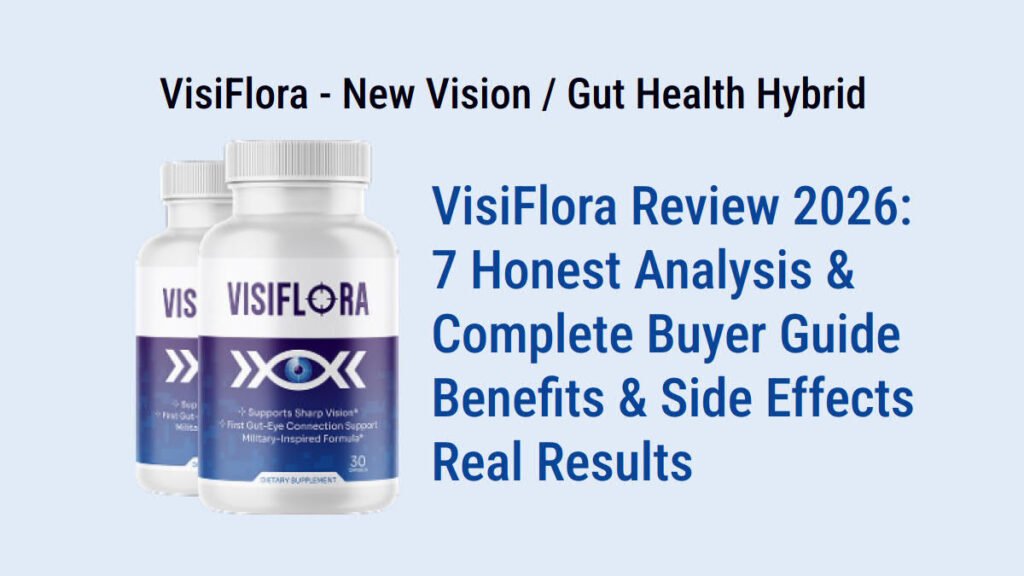
VisiFlora Review 2026: Honest Analysis & Complete Buyer Guide & Real Result
Quick Summary
- Rating: 4.3/5
- Verdict: A well-formulated 22-ingredient vision and gut-support supplement worth considering if you want a “root cause” approach to eye health rather than a basic lutein pill — but it’s not a substitute for an eye exam or fast results.
- Price: $49–$79 per bottle depending on bundle size (official site only)
- Best for: Adults over 35 dealing with screen fatigue, night-vision changes, or age-related eye concerns who are also open to a gut-health angle
If you’ve spent any time this year scrolling past ads for a “gut-eye axis” supplement called VisiFlora, you’ve probably asked yourself the same question everyone else has: is this actually a smart way to support long-term vision, or just another wellness trend wearing a lab coat? We dug into the full ingredient panel, the science behind the gut-eye connection, and what real buyers report after a few months of daily use. Here’s the honest breakdown.
Why Adults Are Rethinking Eye Health in 2026
Two shifts are happening at the same time, and most people aren’t connecting them. The first is screens. Between remote work, streaming, and phones that never leave arm’s reach, the average adult now spends significantly more hours a day staring at a backlit display than at any point in the past. That kind of sustained near-focus and blue-light exposure is a relatively new stress on the visual system, and it shows up as the now-familiar end-of-day symptoms: dry eyes, blurred focus when looking up from a screen, and a dull ache behind the eyes by evening.
The second shift is quieter: a growing body of research connecting gut health to conditions far outside the digestive tract, from skin to joints to, increasingly, the eyes. That’s the gap VisiFlora is trying to fill — not by replacing basic lutein-and-zeaxanthin eye vitamins, but by adding a second layer most formulas ignore entirely. Whether that combination is worth the price tag is exactly what this review sets out to answer, ingredient by ingredient.

What Is VisiFlora?
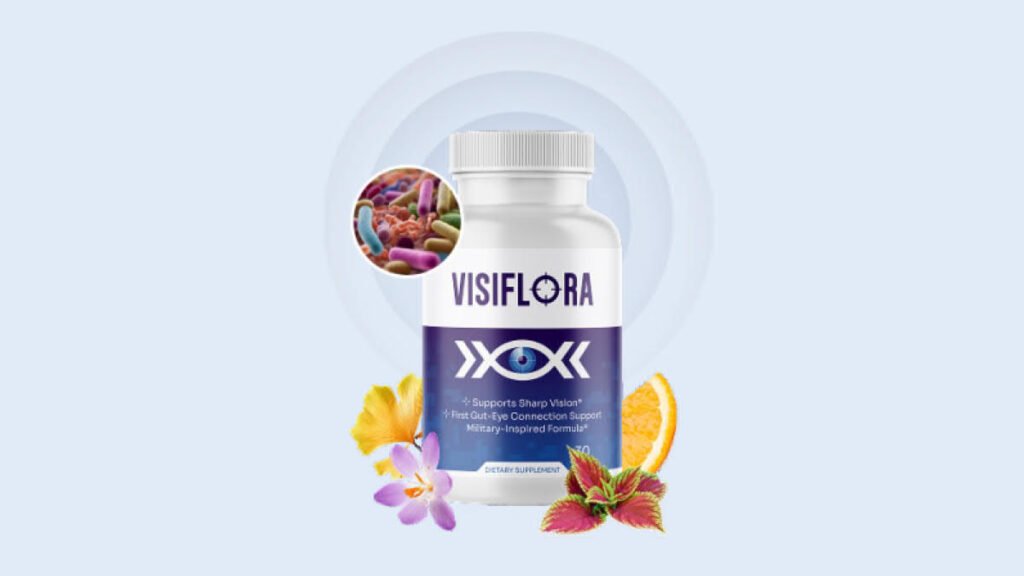
VisiFlora is a once-daily capsule supplement built around a simple but increasingly discussed idea: eye health doesn’t start and end in the eyes. The brand markets it as a “gut-eye axis” formula, meaning it combines classic vision-support nutrients with ingredients aimed at gut lining and microbial balance, on the theory that an imbalanced gut can quietly contribute to inflammation that eventually affects ocular tissue.
Rather than a simple three- or four-ingredient eye vitamin, VisiFlora ships with a 22-ingredient formula organized into four groups: a vision defense blend of antioxidants and minerals, a gut-barrier support blend of botanical extracts, a circulation-support blend, and a macular and lens protection blend built from traditional eye nutrients.
The capsules are manufactured to be non-GMO, stimulant-free, and suitable for a vegan diet, and the company states production happens in a facility that follows organic-handling standards for its plant-based ingredients.
The bigger question, of course, is whether the “gut-eye axis” concept holds up. It’s a genuinely active area of nutrition research — scientists have long studied how gut permeability and systemic inflammation can influence tissues far from the digestive tract, and the eye, with its dense blood supply and sensitivity to oxidative stress, is a reasonable candidate for that kind of indirect effect. That said, this is still an emerging area rather than settled science, and no supplement — VisiFlora included — should be treated as a proven treatment for any eye condition. Think of it as a nutritional support strategy, not a medical intervention.
VisiFlora Key Ingredients Explained
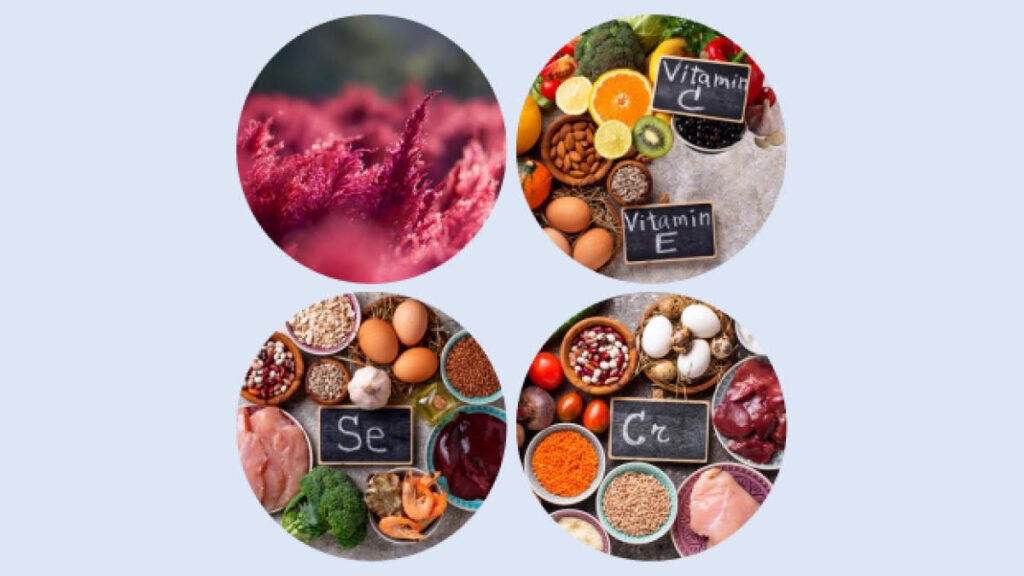
Here’s a plain-English look at the main compounds inside the formula and what they’re generally understood to contribute, based on how each ingredient is typically discussed in nutrition literature.
- Lutein and Zeaxanthin — Two carotenoids that concentrate naturally in the macula, the part of the retina responsible for sharp, central vision. They’re commonly associated with filtering high-energy blue light and supporting the eye’s natural antioxidant defenses.
- Bilberry Extract — A close relative of the blueberry, traditionally used in European eye-health formulas and often discussed in the context of night vision and circulation to the retina.
- Astaxanthin — A potent carotenoid antioxidant frequently included in vision formulas for its role in reducing oxidative stress, which is one of the main drivers of age-related cellular wear and tear in the eye.
- Zinc — An essential mineral that plays a documented role in transporting vitamin A from the liver to the retina, where it’s used to produce melanin, a protective pigment in the eyes.
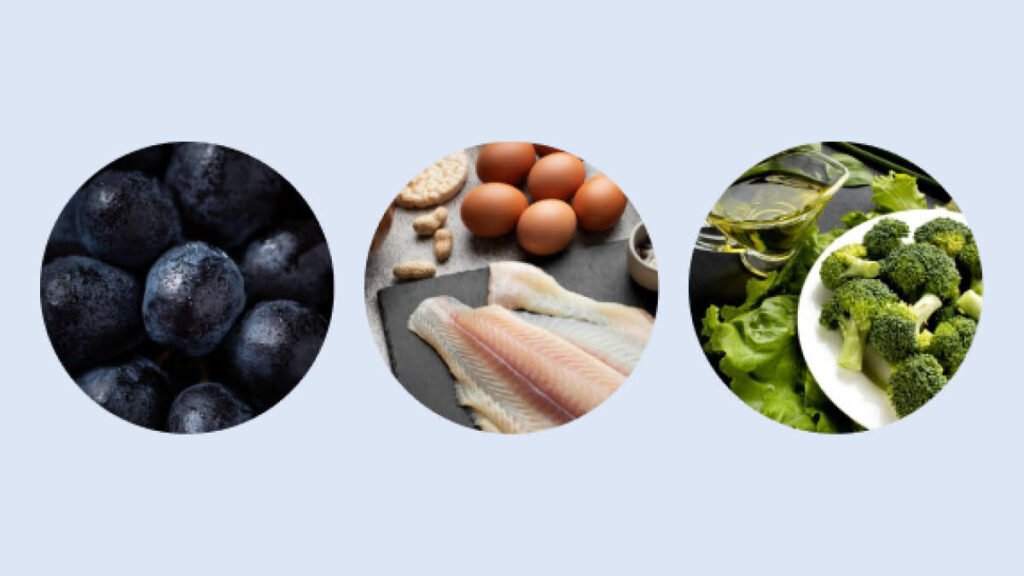
- Grape Seed Extract, Rutin, and Quercetin — A trio of antioxidant bioflavonoids the brand refers to as a “gut armor” group, generally discussed for their role in supporting blood vessel integrity and, by extension, the gut lining.
- Taurine — An amino acid found throughout the retina at high concentrations, often studied for its role in cellular hydration and overall retinal cell function.
- Ginkgo Biloba and Coleus Forskohlii — Botanicals typically included in circulation-focused formulas, discussed for their potential to support blood flow, which matters for delivering the rest of the formula’s nutrients to eye tissue.
- Vitamin A — A foundational eye-health nutrient with a well-established role in supporting the light-sensing cells of the retina.
- Alpha Lipoic Acid — An antioxidant compound that also plays a role in cellular energy production, sometimes included in eye formulas for its dual antioxidant and metabolic support.
- Saffron Extract — A less common but increasingly researched botanical, often discussed alongside lutein and zeaxanthin for its potential role in macular pigment support.

VisiFlora organizes these 22 compounds into four labeled groups on its own packaging: a Vision Defense Matrix (antioxidants and minerals like zinc and astaxanthin), a Gut-Eye Barrier Complex (grape seed extract, rutin, quercetin, and similar botanicals), Vision Performance Boosters (circulation-focused ingredients like Ginkgo Biloba and Coleus Forskohlii), and a Macular and Lens Protection Blend (the traditional eye-health nutrients: lutein, zeaxanthin, bilberry, and vitamin A). That grouping is a useful way to understand the logic of the formula even before you get into any single ingredient’s research.
On dosing, the label lists zinc at 11 mg per serving, which sits within the range most adults can take safely on its own but is worth tracking if you’re also using a separate multivitamin. As with any multi-ingredient supplement, the company does not publish clinical-trial-grade dosing data for the finished formula as a whole — dosages are set based on the individual research behind each compound, which is standard practice across this entire supplement category, not something unique to VisiFlora.
It’s worth noting that ingredient-level research (studies on a single compound in isolation) is not the same as clinical research on the finished product as a whole. VisiFlora, like most multi-ingredient supplements in this category, leans on the individual research behind its components rather than a large-scale trial of the exact formula.

How Does VisiFlora Work?
The brand’s pitch rests on a three-layer explanation. First, gut-supportive ingredients like grape seed extract, rutin, and quercetin are positioned to help reinforce the gut lining, theoretically reducing the leakage of inflammatory compounds into the bloodstream. Second, circulation-focused ingredients such as Ginkgo Biloba and Coleus Forskohlii are meant to improve blood flow to the retina and optic nerve, helping deliver nutrients where they’re needed. Third, the more traditional eye-health nutrients — lutein, zeaxanthin, bilberry, astaxanthin, and zinc — go to work directly on retinal and macular tissue, offering antioxidant support and contributing to the eye’s natural light-filtering defenses.
In theory, that layered structure is what differentiates VisiFlora from a basic multivitamin-style eye supplement. In practice, most people who see a difference report it gradually, since nutrient-based support for vision tends to work over weeks rather than days. That’s consistent with how supplement companies in this space generally frame expectations, and it lines up with what several independent reviewers have noted.
The Science Behind the Gut-Eye Axis



The “gut-eye axis” isn’t a term VisiFlora invented, though the brand has built its entire marketing identity around it. The underlying idea borrows from the better-known “gut-brain axis” and “gut-skin axis” concepts: that the gut lining, and the trillions of microbes living along it, don’t just handle digestion — they influence systemic inflammation levels throughout the body. When the gut lining becomes more permeable than it should be (sometimes referred to informally as a “leaky gut”), certain bacterial byproducts, including lipopolysaccharides (LPS), can enter the bloodstream in greater quantities and contribute to low-grade, chronic inflammation.
Because the eye is a highly vascular, metabolically active organ, it’s a reasonable hypothesis that elevated systemic inflammation could play some role in age-related eye changes over time, alongside the more established drivers like UV exposure, oxidative stress, and genetics.
Researchers are actively studying this connection, particularly around conditions like age-related macular degeneration, but it’s important to be precise about where the science currently stands: this is an emerging, actively-studied hypothesis, not an established cause-and-effect relationship, and no supplement — including VisiFlora — can currently claim to treat or prevent any diagnosed eye disease through this mechanism. What VisiFlora is doing is applying a nutritional support strategy to a scientifically plausible, still-developing area of research, which is a meaningfully different claim than a guaranteed medical outcome.
VisiFlora Benefits
Based on the ingredient panel and how each compound is generally discussed in nutrition science, here’s what VisiFlora is realistically positioned to support:
- Antioxidant support for retinal and macular tissue, which is relevant to normal age-related eye changes
- Nutritional support for the eye’s natural blue-light filtering system, relevant to people who spend long hours on screens
- General circulatory support that may help deliver nutrients to eye tissue more efficiently
- Gut-barrier nutritional support, which ties into the brand’s broader wellness framing
- A convenient once-daily format instead of juggling separate gut and eye supplements
- A formula built without common stimulants, which may suit people sensitive to caffeine-based products
- Vegan and non-GMO sourcing, which matters for buyers with dietary preferences

Beyond the ingredient checklist, it’s worth understanding why the formula’s structure matters in practice. The antioxidant layer (astaxanthin, lutein, zeaxanthin, zinc) is doing the heaviest lifting in terms of established eye-health research — these are the compounds most frequently referenced across the broader vision-supplement category, and their inclusion here is consistent with well-regarded formulas elsewhere on the market.
The circulation layer (Ginkgo Biloba, Coleus Forskohlii) is less universally included in competing products, and its presence is really what makes VisiFlora feel more “complete” compared to a bare-bones lutein capsule — the logic being that antioxidants only help if they’re actually being delivered to the tissue that needs them. The gut-barrier layer is the most novel piece, and also the one resting on the least mature body of direct clinical evidence; it’s best understood as the brand’s forward-looking bet on where eye-health research is heading, rather than its most scientifically settled claim.
For someone comparing VisiFlora against a $15 drugstore eye vitamin, the practical benefit isn’t that VisiFlora is a stronger version of the same thing — it’s that it’s targeting more systems at once. Whether that’s worth the price difference comes down to how much you personally weigh the gut-health angle, since the core eye-nutrient dosing (lutein, zeaxanthin, zinc) is broadly comparable to what you’d find in a well-made single-purpose formula.

VisiFlora Side Effects — Is It Safe?
VisiFlora is formulated from ingredients that are broadly recognized as safe for most healthy adults when taken at label-recommended doses. That said, “generally safe” doesn’t mean “risk-free for everyone,” and a few points are worth flagging honestly.
Because the formula includes zinc, anyone already taking a separate zinc supplement, a multivitamin, or a mineral-heavy formula should add up total daily zinc intake to avoid going over recommended limits. Grape seed extract, Ginkgo Biloba, and similar botanicals can, in some people, interact with blood-thinning medication, so anyone on anticoagulants or preparing for surgery should talk to a doctor before starting. As with most multi-ingredient capsules, mild digestive adjustment (slight nausea or an upset stomach if taken without food) is the most commonly reported early side effect, and it typically settles once the body adjusts.
Anyone who develops hives, facial swelling, or difficulty breathing after taking VisiFlora should stop immediately and seek medical attention, as this can indicate an allergic reaction to one of the plant-based ingredients. Pregnant or breastfeeding individuals, people under 18, and anyone managing an existing eye condition or chronic illness should check with a healthcare provider before adding any new supplement, VisiFlora included. This product has not been evaluated by the FDA and is not intended to diagnose, treat, cure, or prevent any disease.
It’s also worth being realistic about what “safe” means in the supplement context generally. Because VisiFlora is a multi-ingredient formula rather than a single compound, it’s harder to predict exactly how any one person’s body will respond compared to a simple, single-ingredient product. The most sensible approach, as with any new supplement, is to start on schedule with the labeled dose, avoid stacking it with other supplements containing overlapping ingredients (particularly zinc and vitamin A) without checking total daily intake, and give your body the first week or two to signal whether anything feels off before assuming you’re in the clear for the long haul.
VisiFlora Pros & Cons
Pros
- Comprehensive 22-ingredient formula covering multiple angles (antioxidant, circulatory, gut, macular support)
- Non-GMO, stimulant-free, and fully vegan
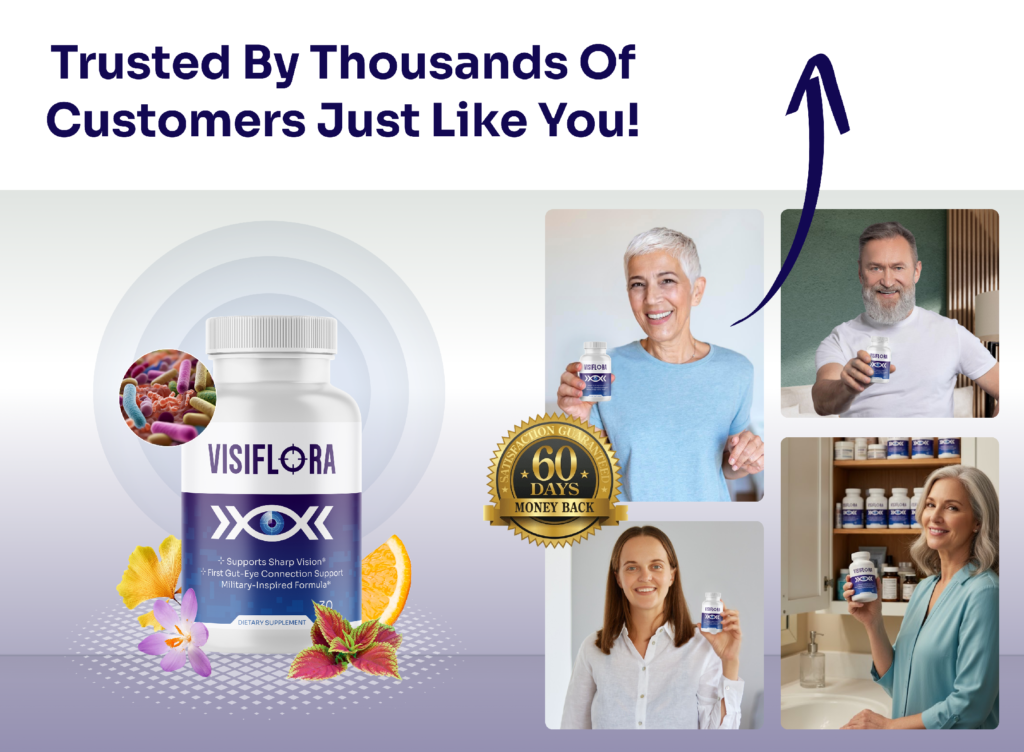
- Backed by a 60-day money-back guarantee, which reduces financial risk for first-time buyers
- Once-daily dosing is easy to build into a routine
- No harsh fillers or synthetic stimulants reported
Cons
- Priced higher than a basic drugstore eye vitamin
- Sold exclusively through the official website, so it isn’t available on Amazon or in stores
- Results build gradually over weeks, not overnight
- The “gut-eye axis” framing is based on an emerging research area, not a settled medical consensus
- Not suitable as a replacement for prescription eye treatment or a comprehensive eye exam
None of these cons are unique to VisiFlora — they’re broadly true of the entire premium multi-ingredient supplement category. The real question for any individual buyer isn’t whether these tradeoffs exist, but whether the added ingredient breadth is worth accepting them for. Buyers who specifically want a single-purpose, low-cost lutein pill will likely find the cons outweigh the benefit; buyers looking for a more comprehensive formula and comfortable with the price and purchase-exclusivity tradeoffs tend to view the cons as reasonable trade-offs rather than dealbreakers.
VisiFlora Pricing and Where to Buy

VisiFlora is sold in single-bottle and multi-bottle bundles, with per-bottle pricing generally running from roughly $49 to $79 depending on how many bottles you order, since multi-bottle bundles typically bring the per-unit price down. Multi-bottle orders in the US commonly ship free, and the company backs every order with a 60-day money-back guarantee, which means you can try it for two months and request a refund if it isn’t a fit. Because it’s sold exclusively through the official manufacturer site, pricing and bundle structure can change, so it’s worth checking the current offer before ordering.
The general pattern across bundle-based supplement pricing (VisiFlora included) is that single-bottle orders carry the highest per-unit cost, while three- and six-bottle bundles bring the price down considerably and are typically the option the brand highlights as the best value.
Given that most reviewers and the brand itself recommend a 60–90 day trial period to properly judge results, a multi-bottle bundle also happens to line up naturally with the amount of product you’d need for a fair trial, rather than running out after three or four weeks on a single bottle. Orders have also historically included digital bonus guides at no extra charge, though bonus offerings are the kind of detail that changes most often and should be confirmed on the current checkout page rather than assumed from past reviews.
Who Should Use VisiFlora?
VisiFlora is best suited to adults roughly 35 and older who are noticing early signs of screen-related eye fatigue, mild night-vision changes, or a general interest in proactive eye-health support before problems become noticeable. It also fits people who are already gut-health conscious and like the idea of a formula that ties the two systems together rather than treating them separately. It’s a reasonable fit for anyone who prefers a stimulant-free, vegan-friendly capsule over formulas built with animal-derived gelatin or added caffeine.
It’s a poor fit for anyone expecting a fast fix, anyone currently under treatment for a diagnosed eye disease (who should be led by their ophthalmologist, not a supplement), and anyone unwilling to commit to at least 4–8 weeks of consistent use, since that’s the window most users and independent reviewers describe as necessary before noticing a difference.
A few reader profiles help illustrate where VisiFlora tends to land well versus where it doesn’t. Someone in their late 40s who works a desk job, spends six-plus hours a day on a monitor, and has started noticing that their eyes feel gritty by mid-afternoon is a strong candidate — the antioxidant and circulation ingredients are squarely aimed at that kind of cumulative screen-related strain.
Someone who already eats a diet rich in leafy greens, gets regular outdoor light exposure, and has no particular eye complaints may not need the formula at all, since a well-rounded diet already supplies much of what a supplement like this is trying to add. And someone managing a diagnosed condition like glaucoma or diabetic retinopathy should treat VisiFlora, if used at all, as a supplement discussed with their ophthalmologist alongside prescribed treatment — never as a substitute for it.
VisiFlora Real Customer Results

Across independent review roundups and buyer testimonials, a consistent pattern shows up: people rarely describe an overnight transformation, but a meaningful share of long-term users report less end-of-day eye strain, an easier time with night driving, and a general sense of “less tired eyes” after a month or two of consistent use. Reviewers who tried the formula for a full 90-day cycle (the length the brand itself recommends for judging results) tended to report the most noticeable outcomes, which tracks with how slow-acting nutritional support supplements typically behave compared to fast-acting stimulants.
As with any supplement review space, it’s worth reading results with a healthy dose of skepticism — individual results vary, and no capsule can override underlying eye conditions that need professional care.
To make this more concrete, here’s how the typical adoption curve tends to look based on the pattern across multiple independent reviews:

Weeks 1–2: Most new users report no noticeable change yet, which is expected — nutrient-based eye supplements aren’t fast-acting the way a caffeine pill is. This is the stage where people who expect overnight results tend to give up prematurely.
Weeks 3–6: This is where the first subjective shifts tend to show up — slightly less end-of-day eye fatigue, a bit more comfort during long screen sessions, and occasionally an easier time adjusting to low light in the evening.
Weeks 8–12: Reviewers who stick with the full 90-day window the brand recommends are the ones most likely to describe a clearer, more consistent difference — this is also the point where the 60-day refund window has typically already closed for early orders, which is why the brand encourages ordering a bundle upfront if you intend to give it a fair trial.
That gradual curve is fairly typical across the entire nutrition-based eye-supplement category and isn’t unique to VisiFlora — it’s simply how cumulative nutrient support tends to behave compared to something like a decongestant eye drop that works in minutes.
Would you like to see more reviews and comments on Vision Floors? On the link below.
Final Verdict: Our VisiFlora Conclusion
Rating: 4.3/5
VisiFlora earns its place among the more thoughtfully built vision supplements on the market largely because of its ingredient depth — 22 compounds spread across four functional categories is more comprehensive than most competitors bundling in a basic lutein-zeaxanthin blend and calling it a day. The gut-eye axis angle is genuinely interesting and grounded in a real, if still-developing, area of research, rather than being invented marketing fluff.
Recommendation: If you’re looking for a stimulant-free, vegan-friendly vision supplement and you’re comfortable giving a formula 6–8 weeks to show its effect, VisiFlora is worth trying, especially with the 60-day guarantee removing most of the financial risk. If you want a fast fix or you’re managing a diagnosed eye condition, talk to your eye doctor first — this is a support supplement, not a treatment.
How VisiFlora Compares to Other Vision Supplements
Most competing eye-health supplements lean on a narrower formula — typically lutein, zeaxanthin, and maybe bilberry or zinc — without addressing circulation or gut health at all. VisiFlora’s four-blend structure gives it more functional range, which is the main differentiator buyers cite when comparing it to older, single-purpose eye vitamins.
Where it loses ground to some cheaper alternatives is price: a basic eye vitamin from a pharmacy shelf will almost always undercut VisiFlora on cost, though it also won’t include the gut-support or circulation ingredients that make up roughly half of VisiFlora’s ingredient list. For buyers who specifically want the broader approach, VisiFlora’s pricing is reasonably competitive against other multi-blend formulas in the same category, most of which sit in a similar $50–$80 per bottle range.
| Feature | Basic Drugstore Eye Vitamin | VisiFlora | Premium Multi-Blend Competitors |
|---|---|---|---|
| Core eye nutrients (lutein, zeaxanthin) | Usually yes | Yes | Usually yes |
| Gut-barrier support ingredients | Rarely | Yes | Sometimes |
| Circulation-support ingredients | Rarely | Yes | Sometimes |
| Stimulant-free | Usually | Yes | Varies |
| Vegan-friendly | Varies | Yes | Varies |
| Price per bottle | $15–$30 | $49–$79 | $60–$90+ |
| Money-back guarantee | Rarely offered | 60 days | Varies, often shorter |
The takeaway from this side-by-side is fairly simple: if all you want is a basic lutein-zeaxanthin combination, you don’t need VisiFlora, and a cheaper drugstore option will cover that need. If you specifically want the broader gut-circulation-vision approach and you’re comfortable with the price difference, VisiFlora sits competitively against other formulas making a similar multi-system claim, and its 60-day guarantee is longer than what many comparable brands offer.

Tips to Get the Most Out of VisiFlora
Take the capsule with a meal that includes some fat, since several of the included nutrients (lutein, zeaxanthin, astaxanthin) are fat-soluble and absorb better alongside dietary fat. Stick to a consistent daily schedule rather than skipping days, since nutrient-based vision support tends to work cumulatively.
Pair it with basic screen-hygiene habits — the 20-20-20 rule (every 20 minutes, look at something 20 feet away for 20 seconds) — since no supplement fully offsets nonstop screen exposure. Track your own experience over a 60–90 day window rather than judging results after a week or two, and keep up with regular eye exams regardless of which supplement you choose, since a capsule is a support tool, not a diagnostic one.
A few additional habits tend to make a real difference alongside any vision supplement: keep screens at roughly arm’s length and slightly below eye level to reduce strain, use artificial tears if your eyes feel dry after long screen sessions, and make sure your room lighting isn’t forcing your eyes to work harder than necessary against screen glare. None of these replace the nutritional support a formula like VisiFlora is designed to provide, but combining the two tends to produce a more noticeable overall improvement than either approach alone.
It’s also worth keeping a simple weekly note of how your eyes feel by end of day — a short, informal log makes it much easier to notice gradual improvement than trying to recall how you felt a month ago.
FAQ for VisiFlora
1. How long does it take for VisiFlora to work?
Most users and reviewers report needing 4–8 weeks of consistent daily use before noticing a difference, with full results typically evaluated around the 90-day mark.
2. Is VisiFlora safe to take with other supplements?
Generally yes, but check your total zinc and vitamin A intake across all supplements to avoid exceeding recommended daily limits, and consult a healthcare provider if you take blood-thinning medication.
3. Can I buy VisiFlora on Amazon?
No. VisiFlora is sold exclusively through the official manufacturer website, which is also how the company backs its money-back guarantee.
4. Is VisiFlora vegan?
Yes, the company states the formula is 100% vegan and non-GMO.
5. Does VisiFlora contain stimulants or caffeine?
No, the brand markets it as a stimulant-free formula.
6. What is the “gut-eye axis”? What does VisiFlora talk about?
It refers to an area of nutrition research exploring how gut lining health and inflammation may indirectly affect eye tissue, distinct from a direct treatment claim.
7. How many capsules do I take per day?
The label directs a once-daily dose; always follow the exact instructions printed on your bottle since formulations can be updated.
8. Is there a refund policy?
Yes, VisiFlora is backed by a 60-day money-back guarantee through the official site.
9. Who shouldn’t take VisiFlora?
Pregnant or breastfeeding individuals, minors, and anyone with a diagnosed eye condition or on prescription medication should consult a doctor first.
10. Does VisiFlora replace an eye exam or prescription treatment?
No. It’s a nutritional support supplement, not a diagnostic tool or medical treatment, and regular eye exams are still recommended.
11. What’s the difference between VisiFlora and a basic lutein supplement?
A basic lutein supplement typically covers only the macular-protection piece of eye health. VisiFlora adds gut-barrier and circulation-support ingredients on top of the traditional eye nutrients, which is the main functional difference.
12. Does VisiFlora help with digital eye strain specifically?
Several of its ingredients—astaxanthin, bilberry, and lutein among them — are commonly discussed in the context of general eye fatigue from screen use, though a supplement should be paired with basic screen-hygiene habits rather than used as a standalone fix.
13. How long should I take VisiFlora before deciding if it’s working?
The brand recommends a 90-day trial period as the benchmark for judging results, which matches the general pattern reported by long-term users.
14. Is VisiFlora backed by any manufacturing certifications?
According to the brand, ingredients are handled in line with USDA National Organic Program standards in a certified facility, and the finished product is non-GMO.
Important Notes
Individual results vary based on diet, age, existing health conditions, and consistency of use. Ingredient research cited in this article reflects general nutrition science on the individual compounds listed and is not a claim that VisiFlora itself has been clinically trialed as a finished product. Pricing, bundle structure, and bonuses mentioned are accurate as of publication but are controlled by the manufacturer and may change at any time—always confirm current pricing on the official site before purchasing.
Medical Disclaimer
This article is for informational purposes only and does not constitute medical advice. VisiFlora and the ingredients discussed have not been evaluated by the Food and Drug Administration, and this product is not intended to diagnose, treat, cure, or prevent any disease. Always consult a qualified healthcare professional, including an eye care specialist, before starting any new supplement, particularly if you are pregnant, nursing, taking medication, or managing an existing health condition.
General Disclaimer
The information in this review reflects publicly available product information and general nutrition research at the time of writing. We make reasonable efforts to keep pricing and product details accurate, but manufacturers may update formulas, pricing, and offers without notice. Readers should verify current details directly on the official VisiFlora website before making a purchase decision.
Affiliate Disclaimer
This post contains affiliate links. If you make a purchase through one of these links, we may earn a commission at no additional cost to you. This compensation does not influence the accuracy, objectivity, or independence of the opinions expressed in this review. We only promote products we believe offer genuine value to our readers.
Want to see full pricing, bonuses, and order options?
Notes
Reviewed by a Certified Nutrition Expert (if true).
Author Name and Bio
Reviewed by Jitendra Malaviya—Health Content Research Writer & Digital Marketing Specialist
Author Name
Reviewed by Jitendra Malaviya
Author Bio
Health Content Research Writer & Digital Marketing Specialist
© 2026 Tips Stay Healthy — tipsstayhealthy.com | All Rights Reserved
Written by Jitendra Malaviya — Certified Health & Wellness Writer & Nutrition Consultant Expert
Stay connected with Tips Stay healthy for the latest updates and news around the world! Follow us on Facebook, Instagram, Threads, Twitter, Pinterest, Telegram, WhatsApp, LinkedIn, Medium, Quora, Quora Space, Reddit, Tumblr, and YouTube for exclusive and exciting content.
Join our Telegram channel and WhatsApp channel for the quickest and latest updates on health & fitness dietary supplement products and blogs around the world!
Also, Read
Lymph Tonic Review 2026: Honest Analysis & Buyer Guide
VisiFlora Review 2026 Honest Analysis & Complete Buyer Guide & Real Result
VisiFlora Review 2026 7 Honest Benefits & Side Effects
VisiFlora Review 3 Real Benefits vs Side Effects 2026
VisiFlora 2026 Buyer Guide: Benefits & Side Effects Explained
VisiFlora Review Honest Analysis of Benefits & Side Effects
More Posts Like This
Taaz Khabar
Categories
For more news and updates from the | Home | About Us | About The Author | Product Reviews | Browse By Categories | Shop | Blog | Contact US | Explore Now | Health Wellness Fitness Products By Category | Addiction | Beauty | Blood Sugar | Blood Sugar and Heart Care | Brain Health | Dental Health | Dietary Supplements | Diets and Weight Loss | Exercise and Fitness | General | Heart Care | Meditation | Men’s Health | Mental Health | Music | Nutrition | Remedies | Sleep and Dreams | Spiritual Health | Strength Training | Therapist | Women’s Health | Yoga | world, please stay connected with us at | Tips Stay Healthy
Page
Health Supplement Product | Browse By Categories | Shop | Health Blog | Health Fitness Products | Health & Wellness Fitness Products By Category
For more news, articles, blogs, and updates from the world, please stay connected with us at Taaz Khabar
Join us today for more tips for health, wellness, and fitness care-related news, blogs, articles, and updates from the world. Stay connected with us at Tapis Stay Healthy
If you enjoyed this story, then feel free to share it with your friends. Thank you for spending your valuable time on Tips Stay Healthy
Stay tuned for more health-related updates and information at Tips Stay Healthy
Happy reading!
Thank you for taking the time to read this.
Affiliate Disclosure:
This article includes affiliate links. If you purchase anything through the links in this article, I will receive a tiny commission. However, it is not an additional cost to you. It helps me purchase coffee!
Some of the links in this article may be affiliate links. This means that if you click on a link and make a purchase, we may earn a small commission at no extra cost to you. These commissions help support the content we create and the maintenance of this site. We only recommend products and services that we believe will provide value to our readers. Your support is appreciated!
From this article, I will receive a tiny commission. However, it is not an additional cost to you. It helps me purchase coffee!
Thank you for taking the time to read this.

Jitendra Malaviya is a certified health and wellness writer with 8+ years of experience researching dietary supplements and fitness products.
He specializes in helping everyday people make informed decisions about
their health journey — covering topics like blood sugar support, weight
management, dental health, joint care, and brain health.
Every product reviewed on TipsStayHealthy.com is thoroughly researched for ingredients, scientific backing, pricing, and real user results.
Credentials:
- Certified Nutrition Consultant
- Health & Wellness Content Writer
- Supplement Research Specialist
- 8+ Years in Health & Fitness Niche